Why Your Hemp Gummies Seem to Have Stopped Working — And Why the Answer Might Surprise You

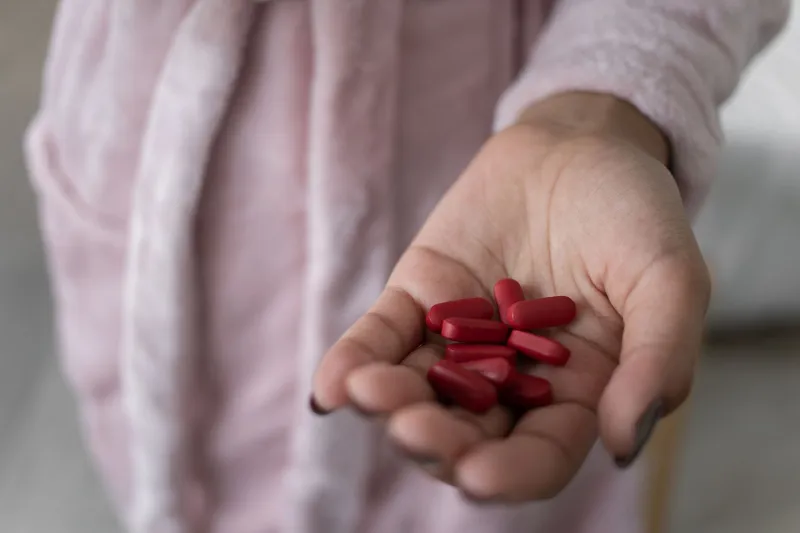
Photo: person examining hemp gummies bottle with thoughtful expression natural light wellness, via lookaside.fbsbx.com
That Familiar Frustration
You found something that worked. You added hemp gummies to your routine, and for a while, everything clicked. Then, gradually, things shifted. The edge didn't come off quite as smoothly. Sleep felt a little more elusive. You started wondering if your body had just... gotten used to it.
It's one of the most common questions we hear: Can you build a tolerance to hemp gummies? And while the short answer is "it's complicated," the more honest answer is this — what most people are calling tolerance usually isn't tolerance at all. It's something else entirely, and once you understand what's actually happening, you're in a much better position to do something about it.
What We Actually Know About Hemp and Tolerance
Let's start with the science, because it matters here. CBD — the primary active compound in most hemp gummies — interacts with your endocannabinoid system (ECS), a vast network of receptors that helps regulate everything from mood and sleep to inflammation and stress response. Unlike THC, the intoxicating compound found in marijuana, CBD doesn't bind directly to CB1 receptors in the same way. That distinction is important.
Classic tolerance — the kind that makes you need more and more of a substance to get the same effect — is strongly tied to receptor downregulation. Your body essentially starts pulling back receptors in response to repeated stimulation. This is well-documented with substances that flood those receptors directly.
With CBD, the picture looks different. Some research actually suggests a phenomenon called reverse tolerance, where regular users need less over time to achieve the same result, not more. The theory is that CBD may support and regulate the ECS rather than overwhelm it, allowing the system to become more efficient with consistent use.
So if true tolerance is unlikely, what's going on when your gummies seem to stop working?
The Real Culprits Worth Looking At
Your Routine Has Shifted (Even Slightly)
Here's something that doesn't get talked about enough: hemp gummies don't exist in a vacuum. They're one input in a much larger system — your body. And your body is constantly changing.
Maybe you've been sleeping worse lately. Maybe work stress has ramped up. Maybe you started a new exercise program, changed your diet, or you're spending more time indoors as the seasons shift. All of these things affect how your endocannabinoid system is functioning on any given day. What feels like a loss of effectiveness might actually be an increase in what your body is dealing with — not a decrease in what the gummy is doing.
Think of it like this: if you've been taking ibuprofen for a mild headache and then you get a tension headache after a brutal week, the ibuprofen isn't working less. The headache is just bigger.
Inconsistent Dosing Is More Common Than You'd Think
A lot of people think they're taking hemp gummies consistently, but when they really examine their habits, there are gaps. Skipped days. Doses taken at wildly different times. Gummies eaten on an empty stomach one day and after a heavy meal the next.
All of that matters. Hemp compounds are fat-soluble, which means bioavailability — how much actually makes it into your bloodstream — varies significantly depending on whether you've eaten recently and what you ate. A gummy taken after avocado toast is going to hit differently than one taken before your morning coffee.
Consistency isn't just about showing up every day. It's about creating stable conditions for your body to actually use what you're giving it.
Your Product Quality May Have Changed
Not all hemp gummies age gracefully. If you've been working through the same bottle for a few months, potency degradation is a real factor. Exposure to heat, light, and air breaks down cannabinoids over time. That bottle sitting near a sunny window or next to the stove? It's not doing you any favors.
It's also worth asking whether your brand has changed anything — formulation, sourcing, extraction method. Reputable companies are transparent about these things. If you can't find a recent Certificate of Analysis (COA) from a third-party lab for your current batch, that's a gap worth closing.
Seasonal and Hormonal Fluctuations Are Real
This one tends to catch people off guard. Your endocannabinoid system doesn't operate the same way year-round. Hormonal shifts — whether tied to your menstrual cycle, seasonal changes in light exposure, or life stage transitions — can meaningfully affect how your ECS functions and, by extension, how you respond to hemp.
Winter, in particular, is interesting. Reduced sunlight affects serotonin and melatonin levels, both of which interact with the ECS. If you notice your gummies feeling less effective in the darker months, you're not imagining it — your baseline has shifted.
What to Do Instead of Reaching for a Higher Dose
The reflexive answer to "this isn't working" is usually "take more." But that's often the wrong move — and it gets expensive fast. Here's a more strategic approach:
Audit your consistency first. Before changing anything else, spend two weeks being genuinely disciplined about timing, dosing, and conditions. Take your gummy at the same time each day, with a meal that includes some healthy fat, and track how you feel. You might be surprised what a little structure does.
Take a short break. Counterintuitive, but effective. A 3-5 day pause can reset your sensitivity without any dose escalation. Think of it as giving your ECS a chance to recalibrate. This works particularly well if you've been taking hemp gummies daily for several months without any interruption.
Look at what else is going on. Are you under more stress than usual? Sleeping poorly? Eating differently? Your hemp gummies are a tool, not a magic override switch. If the underlying conditions have changed significantly, that context matters.
Check your product. Pull up the COA for your current batch. Confirm potency. Make sure you're storing your gummies properly — cool, dark, and away from moisture. If the product has been sitting around for a while, it might simply be past its prime.
Consider cycling. Some experienced hemp users cycle their intake — perhaps five days on, two days off, or three weeks on and one week off. There's no universal protocol here, but the practice of intentional breaks tends to preserve sensitivity better than continuous daily use without pause.
The Bigger Picture
Wellness isn't static. Your body is always adapting, always responding to the full complexity of your life — your stress load, your sleep quality, your environment, your nutrition. Hemp gummies are a genuinely useful tool in that context, but they work best when you treat them as part of a living, evolving routine rather than a set-and-forget solution.
If something feels off, the answer is almost never "take more and hope for the best." It's usually "look closer, adjust smarter, and stay curious about what your body is actually telling you."
At Element Organics, we believe that understanding your wellness is just as important as the products you use to support it. The more you know about how hemp works — and how you work — the better equipped you are to get real, lasting results.