Ask Before You Buy: The Hemp Gummy Questions Most Brands Hope You Never Think to Ask
Photo: person reading supplement label carefully in health food store skeptical consumer, via zygoteai.oss-accelerate.aliyuncs.com
The Wellness Aisle Has a Trust Problem
Walk through any health food store or scroll through a few pages of Amazon results, and you'll find hemp gummies in every shape, color, and price point imaginable. They all have sleek packaging. They all use words like "pure," "natural," and "premium." And almost all of them make you feel, at least briefly, like you've found exactly what you were looking for.
Then you start asking questions — and things get interesting.
The hemp supplement industry in the US is still operating in a regulatory gray zone. The FDA hasn't established a comprehensive framework for CBD products yet, which means there's no mandatory standard that forces companies to prove their products are what they claim to be. That's not a reason to panic, but it is a reason to ask hard questions before you buy.
Here's what you should be asking — and what the answers (or the absence of them) reveal.
"Where Is Your Hemp Actually Grown?"
This is question number one, and it's remarkable how many brands fumble it. Hemp is a bioaccumulator, meaning it absorbs whatever is in the soil around it — including pesticides, heavy metals, and other contaminants. That's great news if the soil is clean. It's a serious problem if it isn't.
US-grown hemp, particularly from states like Colorado, Oregon, and Kentucky, is subject to state agricultural oversight programs that regulate soil quality and farming practices. Hemp sourced from overseas — especially from countries with looser agricultural regulations — carries a higher risk of contamination.
A good brand should be able to tell you not just the country of origin, but ideally the specific farm or growing region. If the answer you get is something vague like "we source from trusted partners globally," that's a flag worth noting.
"Do You Have Third-Party Lab Reports, and Can I Actually See Them?"
Third-party testing is the single most important quality control mechanism in this industry. It means an independent lab — one with no financial relationship to the brand — has analyzed the product and confirmed what's in it.
A Certificate of Analysis (COA) from a third-party lab should show you:
- The actual cannabinoid content (does the product contain what the label says?)
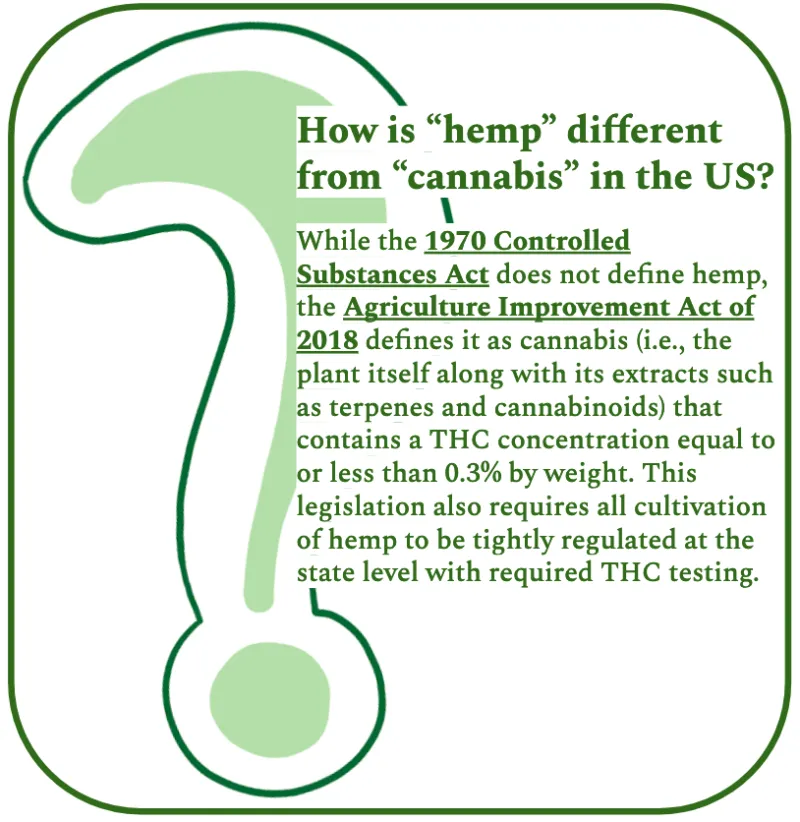
- Whether THC levels are within legal limits (0.3% or below for hemp-derived products)
- Results for pesticides, heavy metals, and microbial contaminants
Here's the catch: plenty of brands will say they do third-party testing. Fewer will actually show you the results. And some will show you results that are months or years old, or that only cover one batch out of dozens.
Look for brands that publish batch-specific COAs — ideally scannable via a QR code on the packaging — and update them regularly. If a company makes you work to find this information, or if it simply doesn't exist on their website, walk away.
"What Extraction Method Do You Use?"
The way cannabinoids are pulled from the hemp plant matters more than most people realize. CO2 extraction is widely considered the gold standard — it's clean, efficient, and doesn't require harsh chemical solvents. Some brands use ethanol extraction, which can also produce high-quality results when done correctly.
The methods to be skeptical of are those involving chemical solvents like butane or propane, which can leave residual traces in the final product if not properly purged. These cheaper extraction processes are more common in budget brands, and they're rarely advertised prominently — for obvious reasons.
If a brand can't tell you how they extract their hemp, or if that information isn't published anywhere on their site, it's a reasonable question to ask directly. Their response — or non-response — will tell you a lot.
"What Else Is in the Gummy?"
This one trips up a lot of consumers who are focused entirely on the hemp side of the equation. But the other ingredients in a hemp gummy matter, too.
Some gummies contain artificial dyes, high-fructose corn syrup, or synthetic flavoring agents that undercut the whole "natural wellness" premise. Others use gelatin, which matters to vegetarians and vegans. A few contain allergens that aren't prominently disclosed.
If a brand is genuinely committed to clean, organic wellness, their ingredient list should reflect that — and they should be proud to share it. Short lists with recognizable ingredients are a good sign. A wall of chemical-sounding additives is not.
"Are You Making Any Health Claims You Can't Back Up?"
This is a subtler one, but it's worth paying attention to. The FDA prohibits hemp and CBD companies from making specific disease-treatment claims (things like "cures anxiety" or "treats chronic pain"). Brands that make these kinds of explicit promises are either uninformed about regulations or actively ignoring them — neither of which is reassuring.
Legitimate brands use careful language that speaks to general wellness support without crossing into medical-claim territory. It's not just legal caution — it's honesty. Hemp gummies can be a meaningful part of a wellness routine, but they're not pharmaceuticals, and any brand pretending otherwise should raise your eyebrows.
Why So Many Companies Go Quiet
Here's the uncomfortable truth: a lot of hemp brands can't answer these questions clearly because the answers aren't flattering. Overseas hemp is cheaper. Skipping rigorous third-party testing saves money. Cheaper extraction methods improve margins. Vague marketing language avoids accountability.
None of that is in your interest as a consumer.
The brands that dodge transparency questions aren't necessarily running scams — but they're prioritizing their bottom line over your confidence and safety. In a market this crowded and this under-regulated, that's a distinction worth making.
What Honest Brands Do Differently
At Element Organics, transparency isn't a marketing angle — it's just how we operate. We source organic, US-grown hemp. Our COAs are published, batch-specific, and accessible. We use clean extraction methods and keep our ingredient lists short and honest. And we don't make promises our products can't keep.
We think that should be the baseline for every hemp company. The fact that it isn't is exactly why knowing what questions to ask matters so much.
The next time you're evaluating a hemp gummy brand — ours or anyone else's — run through this list. The companies that answer clearly and completely have earned your trust. The ones that don't have told you something important, even if they didn't mean to.